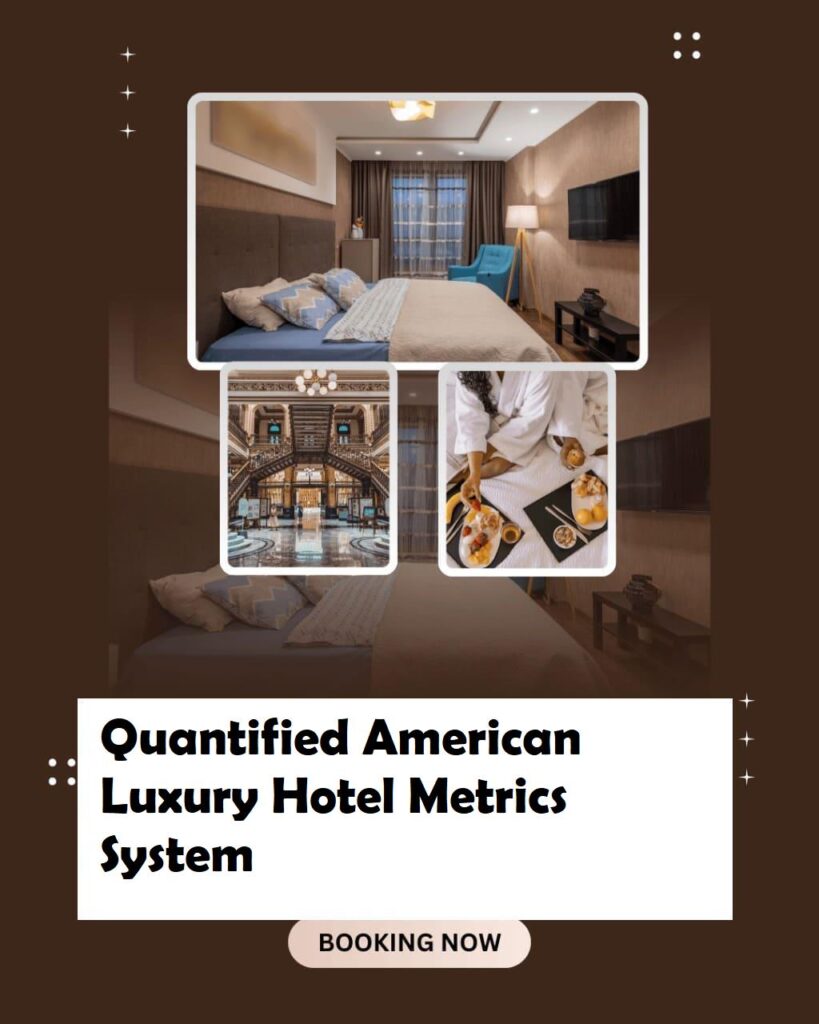
Luxury travel in the United States has entered a new era—one where indulgence is no longer measured only by marble lobbies and skyline views, but also by precision. Quantified American Luxury Hotel Metrics System is a mindset for modern, high-end hospitality: a way of translating the feeling of “everything is perfect” into a set of quietly powerful signals—service cadence, privacy control, wellness personalization, culinary excellence, and the kind of effortless comfort that makes a stay feel like it was designed around you. In today’s most coveted properties, refinement is not accidental. It’s engineered, monitored, and elevated—so the guest experience becomes consistent, seamless, and unmistakably elite.
The Metrics That Define Modern American Luxury
1) Arrival Intelligence and Seamless Access
The first metric is the one guests feel immediately: frictionless arrival. The best luxury hotels treat your entry like choreography—valet, welcome, check-in, key access, luggage, and suite readiness all aligned to the minute. You’re not “processed.” You’re received. A truly quantified system means staff anticipate peak flows, adjust staffing in real time, and protect the mood of the space. The result is calm momentum: you move from curb to suite without waiting, negotiating, or repeating yourself.
2) Suite Atmosphere Index
Luxury is often described as “a vibe,” but the most premium hotels control that vibe with incredible detail. The Suite Atmosphere Index covers lighting temperature, sound insulation, air purity, scent neutrality, bedding calibration, and even the psychology of layout. High-performing properties create rooms that feel expansive, quiet, and private—even in the middle of Manhattan or along a lively Miami shoreline. The best suites don’t just look expensive; they rest you in a way that feels rare.
3) Privacy Assurance Score
In American luxury, privacy is the new status symbol. The Privacy Assurance Score measures discreet staff movement, secure elevator access, low-visibility service routes, controlled photography policies, and “do-not-disturb” protocols that are actually respected. This is the difference between a stay that feels premium and one that feels protected. Whether you’re a high-profile traveler, a couple seeking intimacy, or simply someone who values quiet, top properties deliver a sense of being gently separated from the world.
4) Service Cadence Precision
Great service is not constant hovering—it’s perfect timing. The Service Cadence Precision metric captures how smoothly staff operate around you: turndown that happens when you step out, room service arriving at the exact minute promised, housekeeping that never interrupts your schedule, and concierge follow-ups that feel helpful rather than sales-driven. The magic is in the invisibility. You experience constant care, yet you rarely see the machinery.
5) Culinary Signature and Consistency
A luxury hotel becomes unforgettable when its dining feels like a destination—without becoming complicated. A quantified system tracks ingredient integrity, kitchen pacing, late-night quality, menu clarity, and wine pairing confidence. The best American luxury hotels offer multiple dining moods: an elevated breakfast that feels restorative, a dinner that reads like an event, and a bar program that turns a casual drink into a ritual. Even in-suite dining should feel curated, plated beautifully, and delivered like a private service.
6) Wellness Personalization Depth
Wellness is no longer a spa brochure—it’s a tailored experience. The Wellness Personalization Depth metric includes sleep support (pillow menus, blackout quality), fitness access and privacy, thermal circuits, recovery treatments, and staff trained to adapt to your preferences. The most elite properties build wellness into the stay: quiet floors, calming design, hydration rituals, and treatments that feel more like performance optimization than occasional pampering.
7) Experience Yield and Local Exclusivity
Finally, the system measures what guests take home: the Experience Yield. This includes private tours, reservations that seem “impossible,” tailored itineraries, and access to local culture without crowds. The best hotels don’t merely offer activities—they provide privileged pathways. Think private tastings, after-hours museum moments, oceanfront experiences that feel untouched, or mountain escapes where every detail is designed for serenity and awe.
Q&A: Recommended American Luxury Hotels to Explore
Q: Which U.S. hotels deliver the strongest “arrival intelligence” experience?
A: Look toward properties known for highly polished guest flow—often top-tier city icons in New York, Beverly Hills, and Chicago where timing and discretion are part of the brand DNA.
Q: What hotels are best for privacy and low-visibility service?
A: Ultra-luxury resorts in Malibu, Aspen, Jackson Hole, Napa Valley, and select Miami enclaves often lead here, especially those with private villas, controlled access points, and discreet concierge culture.
Q: Where should I go for a wellness-forward luxury stay in the U.S.?
A: Consider high-end desert sanctuaries in Arizona and California, alpine wellness retreats in Colorado and Utah, or coastal spa resorts in California where recovery, sleep, and wellness cuisine are treated as core pillars.
Q: Which hotels are ideal for culinary-driven luxury travelers?
A: Flagship luxury properties in New York, Las Vegas, San Francisco, and Los Angeles often feature celebrated chefs, world-class cocktail programs, and multi-concept dining—perfect for travelers who want their hotel to be a gastronomic address.
Q: Any suggestions for a “local exclusivity” experience?
A: Seek hotels that specialize in private access—think curated art itineraries in NYC, private vineyard experiences in Napa/Sonoma, bespoke coastal excursions in Santa Barbara, or hidden cultural routes in New Orleans.
Conclusion
Quantified American Luxury Hotel Metrics System is ultimately about turning luxury into certainty. It’s the promise that every detail—arrival, privacy, atmosphere, dining, wellness, and experiences—will perform at an elite level, not by chance, but by design. When a hotel masters these metrics, you don’t just stay somewhere beautiful—you enter a calibrated world where time slows down, comfort feels personal, and exclusivity becomes effortless. The true reward is a kind of modern luxury that doesn’t need to announce itself—because you can feel it in every quiet, perfectly timed moment.Thinking