There’s a particular kind of British luxury that doesn’t announce itself with volume—it arrives with certainty. It’s the quiet confidence of a doorman who knows your name without being told, the soft glow of a corridor lit like a private gallery, and the sense that the city is moving at your pace because the right doors have already been opened. Keystara British Sovereign Hospitality Access Privilege captures that rarefied feeling: not simply staying well, but being received—granted entry to experiences that feel curated, protected, and unmistakably elite.
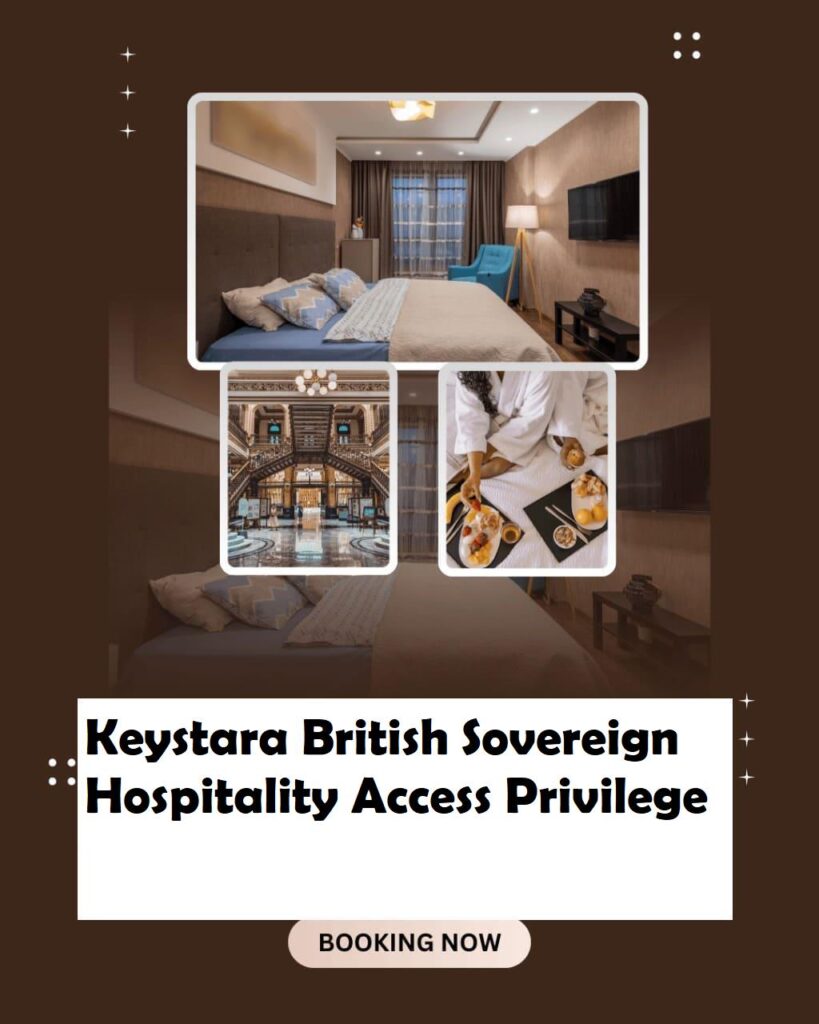
The Keystara Standard: Entry Without Effort
Imagine arriving in London as though you’ve lived there for years. Your driver doesn’t circle—there’s already a reserved bay. Check-in doesn’t happen at a counter; it happens in a lounge with a warm cup of tea served in porcelain, not paper. The “Keystara” idea is access without friction: a hospitality rhythm where your preferences are anticipated, your privacy is respected, and every touchpoint feels deliberate.
This is the first hallmark of sovereign-grade hosting: the property behaves like a private address. Staff move with discreet precision, communicating seamlessly without making the guest feel observed. Rooms are soundproofed not only by construction, but by culture—no interruption unless you request it, no questions unless you invite them. Even the smallest details, from the weight of the cutlery to the scent profile in the wardrobe, feels aligned to a single message: you’re safe here, and you belong.
Privilege as a Design Language
In Keystara-style hospitality, privilege is not a perk list—it’s a design philosophy. It appears in the way spaces are arranged to create calm. Public areas feel expansive but never exposed; you can sit among people and still feel alone. Lighting is flattering, always. Materials are tactile and restrained: polished wood, brushed metal, deep textiles that absorb noise and soften the city’s edges.
The suite becomes more than a room—it becomes a command center for pleasure. A table set not for a quick coffee, but for an elegant late breakfast after a long sleep. A bath that feels like a spa ritual rather than a utility. Windows framing the city like a cinematic scene, yet the glass seems to keep the outside world at a respectful distance. The result is an intimacy that feels expensive: not loud luxury, but controlled luxury.
Access Privilege: The City Opens Up
Where Keystara truly becomes “sovereign” is in access. The hotel isn’t merely a place to return to—it’s the key that turns the city into a private itinerary. Reservations appear at restaurants that politely claimed they were fully booked. Museum hours stretch past closing time, allowing you to wander among masterpieces in near silence. A tailor appointment, a private tasting, a chauffeured route that avoids the crowded obviousness of tourist London—everything arranged with a sense of inevitability.
This is the difference between premium and privileged: premium gives you comfort; privileged gives you priority. In Keystara’s world, the concierge isn’t a desk—it’s a network. Your experience is shaped by relationships and trust, not only by menus and policies. It’s hospitality as a form of social capital—access granted through the hotel’s ability to whisper rather than negotiate.
The Sovereign Mood: Security, Discretion, Continuity
Sovereign hospitality also means emotional security. You can be visible when you want to be, invisible when you don’t. If you’re a public figure, you move through private entrances and discrete elevators. If you’re simply tired, you are given stillness. There is continuity in the service: the same team remembers you, the same standards greet you, and your stay feels like a chapter in an ongoing story rather than a transaction.
Even departures are designed to feel unhurried. Bags are handled without fuss, receipts appear cleanly, and the final impression is not “goodbye,” but “whenever you return, we’ll already be ready.”
Q&A: Planning a Keystara-Style British Stay
Q1: What makes a hotel feel “sovereign” rather than just five-star?
Sovereign hospitality blends privacy, priority access, and high-trust service. It’s less about flashy features and more about how effortlessly your stay unfolds—where discretion is default and solutions arrive before problems do.
Q2: Which neighborhoods in London best match the Keystara vibe?
Mayfair for classic power-luxury, Knightsbridge for refined glamour, and Marylebone for a quieter, cultured prestige. Each offers easy proximity to high-end dining, shopping, and private experiences.
Q3: What should I request to unlock the “access privilege” feeling?
Ask for: private transfers, discreet check-in, curated dining reservations, tailored cultural itineraries, and a suite on a higher floor with quiet exposure. Also request a concierge consultation before arrival—planning is part of the privilege.
Q4: Recommended hotels to match this atmosphere?
- The Savoy – iconic London heritage with polished service and timeless grandeur.
- The Dorchester – Mayfair legend known for impeccable attention and classic elegance.
- Claridge’s – refined Art Deco prestige with a fashion-and-royalty aura.
- The Connaught – discreet, intimate luxury with an exceptional sense of calm.
- The Langham – grand comfort with a welcoming, softly traditional British tone.
Conclusion: The Privilege of Being Received
Keystara British Sovereign Hospitality Access Privilege is ultimately about a feeling: being welcomed into a city as though you’ve earned a quiet rank within it. It’s the blend of comfort and control, elegance and discretion, where your time becomes protected and your choices become effortless. In this kind of stay, luxury isn’t the chandelier overhead—it’s the way the world makes room for you.