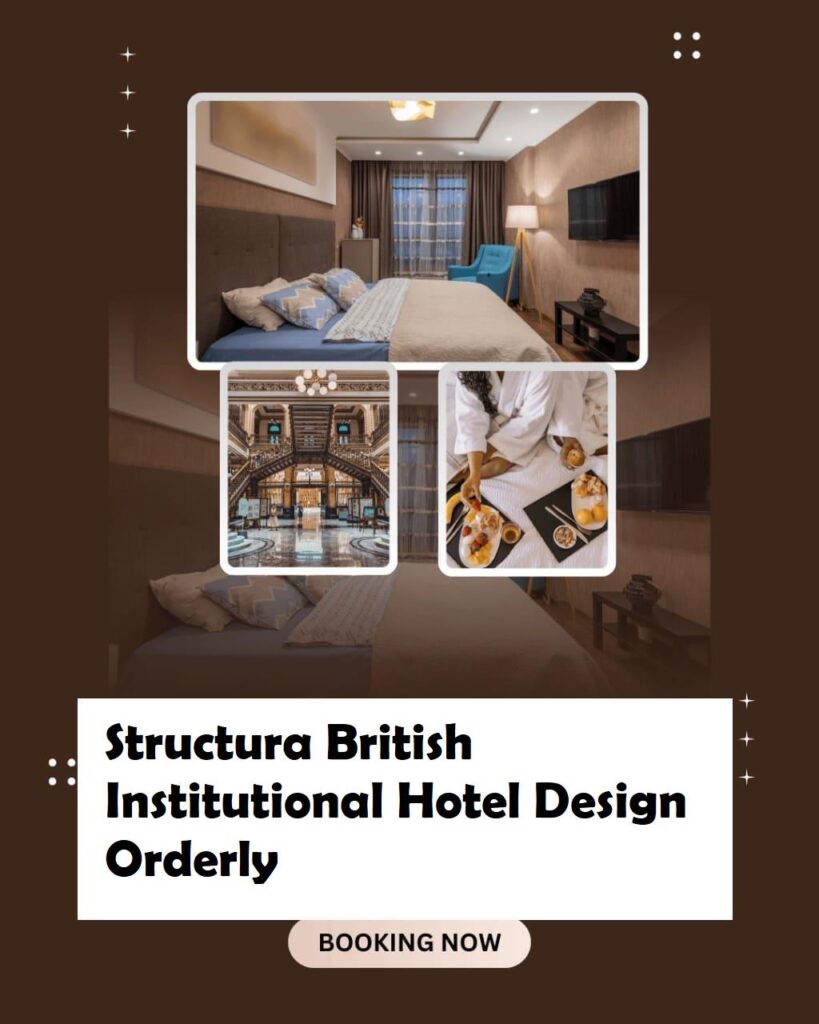
The phrase Structura British Institutional Hotel Design Orderly evokes a world where architectural discipline meets refined hospitality. It suggests more than visual symmetry—it represents a philosophy of calm authority, heritage precision, and thoughtful luxury. Rooted in Britain’s long tradition of institutional design, this concept translates grand civic order, scholarly restraint, and aristocratic balance into hotel experiences that feel composed, intelligent, and enduring. These hotels do not overwhelm; instead, they reassure, offering guests a sense of belonging within spaces shaped by intention and timeless proportion.
Architectural Order as a Language of Luxury
At the heart of British institutional hotel design lies structure. Facades echo classical alignment, corridors follow deliberate geometry, and interiors are curated with restraint. Stone, oak, brass, and muted textiles replace excess ornamentation, allowing craftsmanship to speak quietly. Guests feel an immediate sense of clarity upon arrival—nothing feels accidental. This architectural order creates an environment where luxury is understood as confidence rather than display, ideal for travelers who value composure and intellectual elegance.
Heritage-Inspired Interiors with Contemporary Purpose
While these hotels draw inspiration from universities, courts, and historic townhouses, their interiors are far from static. High ceilings, panelled walls, and library-like lounges are complemented by modern lighting, bespoke furniture, and discreet technology. Rooms are designed to encourage reflection and rest, with writing desks, structured wardrobes, and balanced layouts. The experience feels scholarly yet indulgent—an atmosphere where one can both think deeply and unwind effortlessly.
Institutional Grandeur Reimagined for Hospitality
British institutional design traditionally symbolized authority and permanence. In hospitality, this grandeur is softened into warmth without losing its gravitas. Public spaces feel ceremonial but welcoming, ideal for quiet meetings, refined dining, or contemplative afternoons. Hotels embracing this design language often appeal to diplomats, institutional investors, and seasoned travelers who appreciate spaces that project stability, discretion, and cultural depth rather than transient trends.
A Sanctuary of Order in a Dynamic City
In bustling British cities, orderly hotel design becomes a form of sanctuary. Once inside, guests are removed from urban noise and visual clutter. Soundproofed rooms, symmetrical layouts, and controlled color palettes contribute to a sense of mental clarity. The environment subtly encourages routine—morning tea by tall windows, afternoon reading in structured lounges, evening dinners in composed dining rooms. This rhythm enhances the guest experience, transforming stays into rituals rather than mere accommodations.
Craftsmanship, Consistency, and Institutional Trust
Another defining trait is consistency. British institutional hotels are meticulously maintained, with service standards reflecting the same order found in their architecture. Staff interactions are polished yet natural, reinforcing trust and reliability. This alignment between design and service creates a holistic experience where guests feel understood and respected. Such hotels often become long-term favorites, chosen repeatedly by those who value predictability refined by excellence.
Q&A: Exploring British Hotels with Institutional Design Excellence
Q: Which London hotels best reflect British institutional design principles?
A: Properties near Westminster and Bloomsbury often embody this style, blending historic architecture with contemporary hospitality. These hotels emphasize symmetry, heritage materials, and scholarly elegance.
Q: Are there boutique hotels that adopt this structured design approach?
A: Yes, several boutique hotels in heritage townhouses reinterpret institutional order on a smaller scale, offering intimate yet intellectually rich environments with curated interiors.
Q: What countryside hotels reflect institutional British design?
A: Manor house hotels and estate conversions across the English countryside showcase institutional balance through formal gardens, stately layouts, and restrained luxury, ideal for reflective retreats.
Q: Who is the ideal guest for this hotel style?
A: This design appeals to discerning travelers, professionals, and institutional-minded guests who value structure, cultural continuity, and understated prestige over flamboyance.
Conclusion: Experiencing Order as the Highest Form of Luxury
Structura British Institutional Hotel Design Orderly represents a refined hospitality philosophy where order becomes indulgence. Through disciplined architecture, heritage-inspired interiors, and consistent service, these hotels offer guests a rare experience of calm authority and intellectual comfort. Staying in such an environment is not merely about rest—it is about inhabiting a space where every detail has purpose, every moment feels composed, and luxury reveals itself through balance and restraint.